Diagnosis + Treatment
The Big Picture
Dr. Jekyll and Mr. Hyde? [ Video ]
Five Dimensions of Human Personality
Think It's BPD but How Can I Know?
DSM Criteria for Personality Disorders
Treatment of BPD [ Video ]
Getting a Loved One Into Therapy
Top 50 Questions Members Ask
Home page
Forum
List of discussion groups
Making a first post
Find last post
Discussion group guidelines
Tips
Romantic relationship in or near breakup
Child (adult or adolescent) with BPD
Sibling or Parent with BPD
Boyfriend/Girlfriend with BPD
Partner or Spouse with BPD
Surviving a Failed Romantic Relationship
Tools
Wisemind
Ending conflict (3 minute lesson)
Listen with Empathy
Don't Be Invalidating
Setting boundaries
On-line CBT
Book reviews
Member workshops
About
Mission and Purpose
Website Policies
Membership Eligibility
Please Donate
September 17, 2026, 09:16:11 AM
Welcome,
Guest
. Please
login
or
register
.
Did you miss your
activation email?
1 Hour
5 Hours
1 Day
1 Week
Forever
Login with username, password and session length
Board Admins:
Kells76
,
Once Removed
Senior Ambassadors:
SinisterComplex
Help!
Boards
Please Donate
Login to Post
New?--Click here to register
Experts share their discoveries
[video]
100
Caretaking - What is it all about?
Margalis Fjelstad, PhD
Blame - why we do it?
Brené Brown, PhD
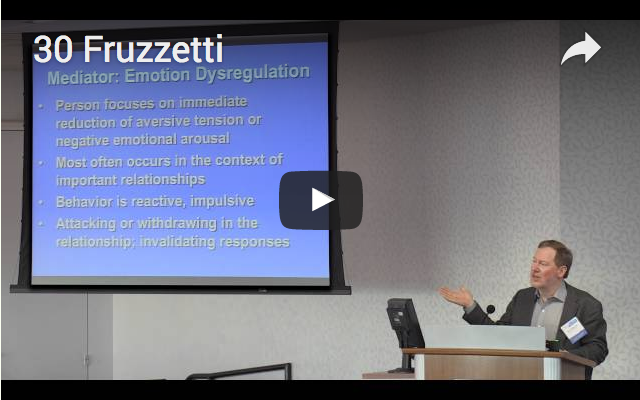
Family dynamics matter.
Alan Fruzzetti, PhD
A perspective on BPD
Ivan Spielberg, PhD
BPDFamily.com
>
Children, Parents, or Relatives with BPD
>
Son, Daughter or Son/Daughter In-law with BPD
> Topic:
Support group for Parents of BPD young adults - north Texas?
Pages: [
1
]
Go Down
« previous
next »
Print
Author
Topic: Support group for Parents of BPD young adults - north Texas? (Read 2964 times)
CedarchickTX
Offline
What is your sexual orientation: Straight
Who in your life has "personality" issues: Child
Relationship status: Mother
Posts: 3
Support group for Parents of BPD young adults - north Texas?
«
on:
July 24, 2024, 07:26:44 AM »
Hello all - I’ve been searching and digging for support groups for parents with young adult children with BPD and it surprises me how little there is out there. Does anyone know of any parent support groups that meet live on the north Texas area? I’m a single mother to a 21 year old daughter with BPD and it has been a gut wrenching and heart breaking three years. Any guidance is appreciated. .
Logged
Our objective
is to better understand the struggles our child faces and to
learn the skills
to improve our relationship and provide a supportive environment and also improve on our own emotional responses, attitudes and effectiveness as a family leaders
kells76
BOARD ADMINISTRATOR
Offline
Gender:
What is your sexual orientation: Straight
Who in your life has "personality" issues: Romantic partner’s ex
Posts: 4222
Re: Support group for Parents of BPD young adults - north Texas?
«
Reply #1 on:
July 24, 2024, 05:22:18 PM »
Hi CedarchickTX and
I'm guessing you've already heard of the National Education Alliance for Borderline Personality Disorder (NEABPD)'s
Family Connections™ - BPD/Emotion Dysregulation (ED)
program? It's the closest thing I can think of. I believe they meet remotely right now (Zoom/Teams/etc) though in the past they may have done in person groups. There is a waitlist (I've been on it for just over 5 months, so hoping my turn comes soon!) but I've only heard good things about it. They also have a
suicidality support group
, and at least a few months ago, there was no waitlist.
The
National Alliance on Mental Illness
also offers free
family support groups
for those with loved ones with mental illness, though for general MH issues, not for BPD specifically (as far as I can tell).
Is your daughter living with you right now?
Gutwrenching is right... BPD is no walk in the park. Keep us posted on how we can be there for you;
kells76
«
Last Edit: July 24, 2024, 05:22:44 PM by kells76
»
Logged
Ourworld
Offline
What is your sexual orientation: Straight
Who in your life has "personality" issues: Child
Relationship status: Widow
Posts: 186
Re: Support group for Parents of BPD young adults - north Texas?
«
Reply #2 on:
July 24, 2024, 06:49:27 PM »
Hi CedarChickTX,
I live in the Kerrville area; a lady in my ss class gave me the number of a group for estranged mothers that meets in town.
Let me know if you’re interested. If you are experiencing estrangement you could probably meet with this group via Zoom.
Best, OurWorld
Logged
Josie C
Offline
Gender:
What is your sexual orientation: Straight
Who in your life has "personality" issues: Child
Posts: 42
Re: Support group for Parents of BPD young adults - north Texas?
«
Reply #3 on:
July 25, 2024, 11:46:43 AM »
Hi CedarchickTX
Quote from: CedarchickTX on July 24, 2024, 07:26:44 AM
gut wrenching and heart breaking
Ain’t that the truth.
I agree that it’s a struggle to find any support group focused on BPD. And having a support system when having a pwBPD in your life is an absolute. I long for groups available near me as well. The real-time back-and-forth of in-person discussion works better for me. And you can give/receive real hugs!
Like kells76, I am on a waitlist for the NEA BPD Family Connections online class. I know it’s a long wait, but it sounds worth it.
I’ve also been to some NAMI support groups recently, both in-person and online. While I’ve not met anyone discussing BPD-specific issues, I tend to get a helpful piece of info at each meeting. And in hearing other’s stories of both crisis and stability, I don’t feel so alone which helps some.
Have you done any Dialectical Behavior Therapy (DBT)? It seems to be the gold standard for treating BPD traits—and it helps those loving a pwBPD, too. About seven years ago, my husband and I joined a DBT program for parents of adult children w/BPD. Our DD(21 at the time) refused to take part, but the therapist allowed us to join anyway.
It was a game-changer.
We were in a year-long program with a small group of parents. It wasn’t a time to vent (although that is surely needed at times, too!) but rather to learn specific skills to manage our own emotions and relate with our daughter more effectively. We met twice monthly — and it was totally worth the four-hour round trip. We learned skills (the distress tolerance and mindfulness areas were really helpful for me), left with homework, and returned to share what did/didn’t work. It was very positive and I highly recommend it.
During my dd(now 29) recent crisis and downward spiral, I feel like all my skills went AWOL. To ‘right my ship’ I began revisiting my notes from DBT and it is helping diminish my overwhelming pain, fear, guilt, and resentment. Returning to this forum is helpful, too. The folks here understand and the support is tremendous.
Sending a virtual hug,
Josie C
Logged
CC43
Offline
What is your sexual orientation: Straight
Who in your life has "personality" issues: Child
Relationship status: Married
Posts: 1223
Re: Support group for Parents of BPD young adults - north Texas?
«
Reply #4 on:
July 25, 2024, 01:34:43 PM »
Hi Cedar,
I had never heard of BPD until my adult stepdaughter was diagnosed with it. But when I read up on the behaviors associated with the diagnosis, she fit almost all of them. It felt really scary how those three, pejorative-sounding words--Borderline Personality Disorder--could explain my stepdaughter's low stress tolerance, impulsivity, anger issues, blame-shifting, suicidality, broken relationships and general dysfunction as she entered adulthood. But then I read that BPD is treatable, which gave me some hope. I'm happy to say that my stepdaughter has improved significantly with DBT therapy. She's been fortunate in having the steadfast support of her dad, as well as access to top-notch therapies. She also deserves credit, because she decided that she needed to get help to start to feel better, and that is probably the most important factor in turning things around.
After learning about BPD (and NPD), I've come to the realization that there are a few others in my life who exhibit the behaviors associated with these disorders, though they remain undiagnosed to my knowledge. But reading up on the disorder has made me more sensitive in how I respond to others, especially when they show signs of agitation or anger. I'm also more aware of my own triggers.
I haven't sought therapy for myself (yet), but in learning how to cope with a family member with BPD, I have confided in some friends. In that process, I've learned about how prevalent "neurodivergence" really is. Now I know that several friends, colleagues and neighbors have loved ones with neurodivergent traits, from depression to NPD to addictions to severe learning disabilities (and sometimes a combination thereof). Though specific challenges may be different in each case, the stories of heartbreak and resilience are common denominators. It's amazing how parents can get creative in helping loved ones overcome obstacles and find a way to a better life. They can be lifesavers, because they too have gone through the wringer, by dealing with alternative education options, doctors, therapies, medications, police, insurance, residential care, etc. I guess that knowing you're not alone can be therapeutic in itself. So for me, my support group has consisted of a few friends who have children or siblings with neurodivergent traits. They've also helped me by sharing what sort of boundaries they have in place. Sometimes, deciding what is "firm but fair" in terms of boundaries can evolve over time!
Logged
guiltymom
Offline
What is your sexual orientation: Straight
Who in your life has "personality" issues: Child
Relationship status: living apart
Posts: 25
Re: Support group for Parents of BPD young adults - north Texas?
«
Reply #5 on:
July 26, 2024, 01:35:54 PM »
[Sorry, I sent this to the wrong thread before.]
I'd love to find a straight-up support group. The Family Connections class that I did was more of an information session for people who were just beginning to learn about BPD; the facilitators, who seemed knowledgeable and open, did little more than read handouts out loud. The first 10 minutes or so at the beginning of each session—when we went around the Zoom and introduced ourselves and said why we were there—was the only part of the two hours that felt sort of like a support group, and it was great.
Logged
Ourworld
Offline
What is your sexual orientation: Straight
Who in your life has "personality" issues: Child
Relationship status: Widow
Posts: 186
Re: Support group for Parents of BPD young adults - north Texas?
«
Reply #6 on:
July 26, 2024, 02:08:59 PM »
Hi CedarChickTX,
Here is the contact info for a support group in Kerrville, Tx for estranged parents: Alycia-210-488-6154
I do not know if your child is estranged or not.
OurWorld
Logged
CedarchickTX
Offline
What is your sexual orientation: Straight
Who in your life has "personality" issues: Child
Relationship status: Mother
Posts: 3
Re: Support group for Parents of BPD young adults - north Texas?
«
Reply #7 on:
January 12, 2026, 07:38:23 PM »
Hello everyone. I can’t believe I have missed all your wonderful and helpful posts. I never received any notification of a response to my original thread before today.
My daughter is now 23. Somehow we managed to get her through college (she just graduated in December) but in between this time there has also been therapists, meds, psychiatrists a couple car accidents and a dwi. To say it’s been overwhelming and depressing is an understatement. I’m a single parent an her dad is not very involved in her life which is much of the issue. He lives down the road but despite having Carte Blanche to her life he’s at best a once every couple months ice cream uncle. She’s back home for the last two days since graduation and it has become incredibly difficult. My own health feels like it’s suffering.
To answer someone question, yes I have heard of Nami and neabpd. I have taken the three months parent course, learned the skills and also now feel like I need to right the ship again. I am not an estranged mother but would love to speak to those ladies so whoever gave me that phone number, thank you so much.
I need parent support desperately. I may create my own in the area. I’m in north Texas so if you need a group let me know.
Thank you all for your kind and supportive responses.
Logged
Can You Help Us Stay on the Air in 2024?
Pages: [
1
]
Go Up
Print
BPDFamily.com
>
Children, Parents, or Relatives with BPD
>
Son, Daughter or Son/Daughter In-law with BPD
> Topic:
Support group for Parents of BPD young adults - north Texas?
« previous
next »
Jump to:
Please select a destination:
-----------------------------
Help Desk
-----------------------------
===> Open board
-----------------------------
Relationship Partner with BPD (Straight and LGBT+)
-----------------------------
=> Romantic Relationship | Bettering a Relationship or Reversing a Breakup
=> Romantic Relationship | Conflicted About Continuing, Divorcing/Custody, Co-parenting
=> Romantic Relationship | Detaching and Learning after a Failed Relationship
-----------------------------
Children, Parents, or Relatives with BPD
-----------------------------
=> Son, Daughter or Son/Daughter In-law with BPD
=> Parent, Sibling, or In-law Suffering from BPD
-----------------------------
Community Built Knowledge Base
-----------------------------
=> Library: Psychology questions and answers
=> Library: Tools and skills workshops
=> Library: Book Club, previews and discussions
=> Library: Video, audio, and pdfs
=> Library: Content to critique for possible feature articles
=> Library: BPDFamily research surveys
Our 2023 Financial Sponsors
We are all appreciative of the members who provide the funding to keep BPDFamily on the air.
12years
alterK
AskingWhy
At Bay
Cat Familiar
CoherentMoose
drained1996
EZEarache
Flora and Fauna
ForeverDad
Gemsforeyes
Goldcrest
Harri
healthfreedom4s
hope2727
khibomsis
Lemon Squeezy
Memorial Donation (4)
Methos
Methuen
Mommydoc
Mutt
P.F.Change
Penumbra66
Red22
Rev
SamwizeGamgee
Skip
Swimmy55
Tartan Pants
Turkish
whirlpoollife
Loading...