Diagnosis + Treatment
The Big Picture
Dr. Jekyll and Mr. Hyde? [ Video ]
Five Dimensions of Human Personality
Think It's BPD but How Can I Know?
DSM Criteria for Personality Disorders
Treatment of BPD [ Video ]
Getting a Loved One Into Therapy
Top 50 Questions Members Ask
Home page
Forum
List of discussion groups
Making a first post
Find last post
Discussion group guidelines
Tips
Romantic relationship in or near breakup
Child (adult or adolescent) with BPD
Sibling or Parent with BPD
Boyfriend/Girlfriend with BPD
Partner or Spouse with BPD
Surviving a Failed Romantic Relationship
Tools
Wisemind
Ending conflict (3 minute lesson)
Listen with Empathy
Don't Be Invalidating
Setting boundaries
On-line CBT
Book reviews
Member workshops
About
Mission and Purpose
Website Policies
Membership Eligibility
Please Donate
October 24, 2026, 03:20:21 PM
Welcome,
Guest
. Please
login
or
register
.
Did you miss your
activation email?
1 Hour
5 Hours
1 Day
1 Week
Forever
Login with username, password and session length
Board Admins:
Kells76
,
Once Removed
Senior Ambassadors:
SinisterComplex
Help!
Boards
Please Donate
Login to Post
New?--Click here to register
Experts share their discoveries
[video]
100
Caretaking - What is it all about?
Margalis Fjelstad, PhD
Blame - why we do it?
Brené Brown, PhD
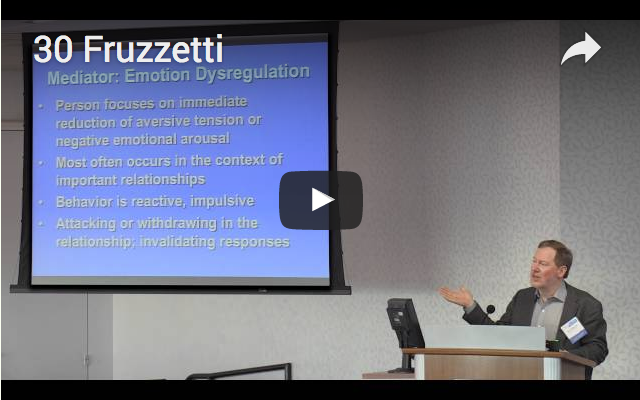
Family dynamics matter.
Alan Fruzzetti, PhD
A perspective on BPD
Ivan Spielberg, PhD
BPDFamily.com
>
Relationship Partner with BPD (Straight and LGBT+)
>
Romantic Relationship | Detaching and Learning after a Failed Relationship
> Topic:
Asking a few difficult questions of myself
Pages: [
1
]
Go Down
« previous
next »
Print
Author
Topic: Asking a few difficult questions of myself (Read 3323 times)
hotchip
Offline
What is your sexual orientation: Bisexual
Who in your life has "personality" issues: Ex-romantic partner
Relationship status: Broken up
Posts: 100
Asking a few difficult questions of myself
«
on:
May 09, 2026, 01:38:55 AM »
As you can tell, I’ve been posting quite a bit, and also reading old posts by user 2010 which have been extremely enlightening. I think I am at a stage where I am ready to ask some difficult questions of myself about why I sought and remained in such a harmful dynamic, what the interaction (not a relationship) represents for me now, and how I can avoid it in the future.
I’ve particularly appreciated 2010’s remarks about a common (especially) western misunderstanding of karma as a law of reward and punishment as opposed to cause and effect. I did not deserve the lies, manipulation or controlling behaviour. Experiencing these things was not a punishment for being ‘bad’. However, there were actions I undertook which contributed to causing or allowing these things to happen and a negative interaction to develop.
These actions were based in beliefs, patterns, narratives and worldviews that I had and probably still have, and which it is now the time to scrutinise. One is quite a grandiose self-perception. For example, I had an idea I could change or influence another person who lacked integrity, to the point where they would have integrity.
Prior to our relationship, uBPDx acted in ways that were extremely contrary to the values we both nominally shared and which were supposedly the cornerstone of our relationship, yet I believed that through the relationship we could transcend these patterns. To be fair to me, uBPDx initially represented themself and their history as being quite different from what it actually was, hiding some aspects that significantly lacked integrity. If I had known this from the start, I would never have entered the relationship.
However, once I learned about the discrepancy/ misrepresentation, my response was first a toxic expression of anger at the perceived betrayal; and then, after we made up (re-idealisation), to believe that together, we could both somehow change things so that uBPDx could really become the person they had misrepresented themself as.
This choice reflected my own denial and neediness. I was lonely and isolated and didn’t want to face the evidence this seemingly perfect person was not all they seemed. It also reflected an unrealistic, ‘love conquers all’ narrative. People cannot change and develop integrity based on an outside influence, integrity is something you develop within yourself.
There is also grandiosity – the idea that *I* was so special that a person who had previously acted without principle would, though knowing me, become someone different. There is a degree of narcissism here (not NPD, just the traits, which can be healthy, but in this case were not).
Letting go involves relinquishing the idealised, all-powerful vision of myself that was mirrored in uBPDx’s eyes during the ‘good’ times. Which was quite an intoxicating vision! And is quite difficult to relinquish, even now. Accepting that the interaction (not relationship) was based on falsities is one thing, accepting that
the ideas and hopes it was premised on were also false
is another, and quite difficult. I think it is something I need to do so I do not simply go out and replace the uBPDx with a similar relationship.
Logged
Notwendy
Offline
What is your sexual orientation: Straight
Who in your life has "personality" issues: Parent
Posts: 12460
Re: Asking a few difficult questions of myself
«
Reply #1 on:
May 09, 2026, 04:37:46 AM »
This is an insightful post, and it also can tie into the other thread by PearsBefore about what traits in a person seem to predispose them to being in a long term relationship with someone with BPD.
I think it's possible to be initially attracted to someone with BPD, but have that not lead to a long term relationship if there are incompatibilities, but some people who are inititially attracted to someone with BPD stay longer. Why?
From what I have read, who we attract and who we are attracted to is a result of many factors, and some not conscious. Our family of origin dynamics is one influence. If somene grows up with family dysfunction, a person who has a disorder may feel "familiar" to them, and they may not see the red flags as different.
You have also identified aspects of your own personality that somehow the situation you had fit an emotional need of yours, even if it was a dysfunctional one.
Another factor that is not conscious is boundaries. If someone has emotionally healthy boundaries, they will feel a sense of discomfort around someone who doesn't. Pairing up with that person for the long run may be a result of both people having poor boundaries. Boundaries can be too weak or too strong.
I think it is very wise of you to explore your own succeptibility to the previous relationship, doing the work of your own recovery, so that your feeling of a "match" with someone is different next time. I have read that if someone ends a dysfunctional relationship without doing this work, they could be more succeptible to another similar relationship. Doing this work can also be beneficial to you in general.
The Karma analogy is interesting. I think it's a universal concept to many religions although western religions don't discuss it in that term or context. As you say, it's not a system of reward- do good things, get good things back or vice versa in the immediate sense. It's more of a recognition that there's a higher order in the universe than we are, and that we don't know the big picture, we don't know the ultimate justice, but we should do our part to put some good into the world, to the extent we can. It may be a different view than in the western world but it is not incompatible with western religions that recognize the higher wisdom and order of the universe as belonging to God.
This is not the same as natural consequences. Some things we don't control but we do know that actions have consequences.
It's recognizing that we don't have the power to change another person, only ourselves and that we are responsible for our own behavior. One is that, if we enable a person's behavior, that behavior is likely to increase. So we can do things that contribute to dysfunction.
What can appear like "helping" someone is actually self serving if we are doing it with the intent to change them or gain a certain response.
With the post by PearsBefore- this discusses some attributes of people who may be more inclined to stay in a long term relationship with someone with BPD. Labels don't tell the whole of a person and someone can have traits without completely fitting a label, but if the attributes lead to insight and personal change, there's a use for them to give us ideas about ourselves. Someone may find they have traits of all, some narcisism, some enabling, some being socially less savvy, without the entire labels fitting them and still want to work on these traits.
You've identified some traits in yourself that you wish to change. I think working with a counselor who can be objective and help you through this process is a good idea. One doesn't have to have something "wrong" with them to decide to work on personal growth.
Logged
CC43
Offline
What is your sexual orientation: Straight
Who in your life has "personality" issues: Child
Relationship status: Married
Posts: 1265
Re: Asking a few difficult questions of myself
«
Reply #2 on:
May 09, 2026, 10:42:58 AM »
Hi there,
While it's good to reflect and be introspective, I also think you probably shouldn't beat yourself up too much. First off, everyone makes decisions that they think are best given the situation and information available. Secondly, I believe that pwBPD/NPD often exhibit somewhat delusional, "magical" thinking. They have a tendency to idealize things, perhaps related to their black-and-white thinking. In the context of a new relationship, they might at first envision a fairytale, and get swept up in the excitement and novelty of it. All of the sudden, you're the solution to all their problems--perhaps you offer housing, you assuage their loneliness, you provide needed human connection, you have money, you provide attention, you make her days exciting, you make her feel loved. She has a crush on you. Then fantasy takes over--she thinks she'll never be alone, and that she can stop working, move into your place, and you'll take care of her, give her money, wine and dine her, shower her with attention. So what does she do? She puts her best foot forward, like most people do in a new relationship. And yet with BPD/NPD, she's prone to withhold information and distort the truth (sometimes wildly), but she'll justify it to herself by with her disordered/delusional thinking.
Only when she feels completely secure in the relationship and you're fully committed, will she show you who she really is. And by then, you have a lot invested in the relationship. Since you're a good person, you're willing to fight for her, because, after all, at the start of the relationship, everything seemed great. And maybe your partner plays the victim, and you truly want to save her, because she is your partner after all. In a normal relationship, if your partner were sick, you'd try to help so that she could get better, right? The problem is, with BPD/NPD, conventional help typically doesn't work. And so it's logical that you'd be frustrated that no matter what you do and no matter how much you try to be supportive, the relationship isn't working normally. Is that really all your fault? My guess is, probably not--my guess is that you put everything you had into trying to make the relationship work, and even that wasn't enough, because a relationship requires the cooperation and efforts of BOTH parties. So you did the best you could, and that's all you can do. That's all anyone can do.
Logged
hotchip
Offline
What is your sexual orientation: Bisexual
Who in your life has "personality" issues: Ex-romantic partner
Relationship status: Broken up
Posts: 100
Re: Asking a few difficult questions of myself
«
Reply #3 on:
May 20, 2026, 08:15:27 AM »
Thank you as ever for your wise and kind insights NotWendy and CC43!
NotWendy, as ever, you are 100% right regarding the FOO dynamics. It's funny and humbling because as much as many of us have a desire to feel special and unique (and maybe are susceptible to BPD flattery on that basis), we are all very similar and predictable in the same human patterns.
Excerpt
...everyone makes decisions that they think are best given the situation and information available. Secondly, I believe that pwBPD/NPD often exhibit somewhat delusional, "magical" thinking. They have a tendency to idealize things, perhaps related to their black-and-white thinking...
Only when she feels completely secure in the relationship and you're fully committed, will she show you who she really is.
Thank you for the reassurance CC43. There are so many signs
in hindsight
the uBPDx was not so wonderful after all, but of course, I am interpreting them in hindsight. It wasn't completely irrational of me to see a person who was seemingly troubled, but also had good qualities and supposedly wanted to do better - and think that I could help them, or that we could help each other.
I've been thinking a bit about... the word 'boundaries' doesn't quite cover it for me, more something like accountability - commitments and agreements and their violation.
One thing I've noticed is that from quite early on in the relationship, uBPDx made promises that were not kept. For example, there was a time I was very stressed and overwhelmed and busy. I was coming to visit him in his city, but said I might need to cancel. uBPDx became very upset about this, but also promised to provide me with some support by doing a few tasks to help me out.
When I arrived, it transpired that he had not done those tasks, and also put off telling me until I brought it up. I remember that I became quite overwhelmed and covered my head with a blanket (we were sitting in bed). uBPDx described this as me being 'horrible' to him, and later had a full, unstable meltdown when I expressed, in quite a reasonable manner, that I was angry and upset he hadn't helped me as he'd promised, even though I acknowledged he also had tried to show warmth and hospitality for me in other ways.
Somehow this ended up with me sort of apologising and smoothing things over to uBPDx and feeling guilty that I didn't properly appreciate the things he did for me.
It strikes me in hindsight that this was setting the stage for a relationship where, while uBPDx was ostensibly very committed and adoring and putting in lots of effort, the effort would be based in his feelings and capabilities from moment to moment. It wouldn't necessarily coincide with
what was actually agreed on
. It was not accountable.
I think for future relationships, this will be something I am much more careful about. If I ask for X, and you promise X, and X is not fulfilled - I don't want to allow this to be papered over by a partner saying, 'but actually, I did Y!' 'Fidelity' often has a sexual connotation, but it also means sticking to one's word - being accountable to one's word - in future, this must not be something I let slide.
I have signed up for a first free appointment with a counsellor, so we'll see.
Logged
CC43
Offline
What is your sexual orientation: Straight
Who in your life has "personality" issues: Child
Relationship status: Married
Posts: 1265
Re: Asking a few difficult questions of myself
«
Reply #4 on:
May 20, 2026, 08:53:42 AM »
Quote from: hotchip on May 20, 2026, 08:15:27 AM
One thing I've noticed is that from quite early on in the relationship, uBPDx made promises that were not kept.
Hi again,
Well this observation ties into the "magical" thinking in my opinion. My guess is that when he makes a promise, the pwBPD might actually mean it--he might have the intention of fulfilling it. His thinking is "magical" because he's generally unrealistic about the future, as well as his own abilities to execute. When the time comes to deliver on his promise, he encounters the usual obstacles--it's taxing, it's boring, it's not fun, he's tired, he doesn't feel like it. Most "normal" people can tolerate temporary discomfort or distress, because they're emotionally strong, and they generally stay true to their good character, principles and vision--for example, the desire to fulfill a promise is worth the temporary discomfort of actually following through, especially when the promise is made to a loved one. But for a pwBPD, his negative emotions take over. He starts to think you're being intentionally mean to him, that your needs are more important than his, that you're being lazy/unfair/demanding/accusatory. If he's really disordered, when he feels guilty for reneging on his word, he might "rewrite" history--he'll swear he never made a promise in the first place, that you're lying, that you're being toxic and narcissitic for bringing it up, how dare you complain about all the efforts and sacrifices you are making. In essence, you're pointing out that he's not contributing enough, and he takes that as a personal affront. It's not about the dishes/dinner/housework/utility bill anymore, it's about his very self-worth. Cue the meltdown. Probably all because he wouldn't do a simple thing he promised, like have some food available for you when arrive at his place after a full day of work and travel. Sound familiar?
Now it could be that the pwBPD is actually mean-spirited. I've seen that too, when "promises" are made without any intention of fulfilling them. Some pwBPD will lie easily and regularly, mainly to get what they want. They might justify it because their emotions have hijacked their rational thinking. Alternatively, they might justify it because they think you're toxic and deserve punishment. But the tone of your post sounds like that scenario is less likely.
Logged
CC43
Offline
What is your sexual orientation: Straight
Who in your life has "personality" issues: Child
Relationship status: Married
Posts: 1265
Re: Asking a few difficult questions of myself
«
Reply #5 on:
May 20, 2026, 09:05:50 AM »
PS
I'm very much a "doer," and I believe that actions speak louder than words. It's wonderful to talk about a rosy future, but you know what? I think the best predictor of the future is the patterns of the past. Therefore, I tend to place more value on past actions. Does a person earn a decent living? How does he treat others? Does he follow healthy habits? How does he act when nobody is looking? Does he take care of himself, his body, his environment? Does he have friends? Does he have solid relationships with family members? Does he treat others kindly? Does he have some healthy hobbies? I think the actions of the past are strong indicators of what the future might look like.
If an adult only talks about past traumas, doesn't get along with others (family, ex-friends, co-workers, etc.), is overly reliant on others to help them function, and has meltdowns over seemingly nothing, then those are red flags in my opinion.
Just my two cents.
Logged
Notwendy
Offline
What is your sexual orientation: Straight
Who in your life has "personality" issues: Parent
Posts: 12460
Re: Asking a few difficult questions of myself
«
Reply #6 on:
May 20, 2026, 09:40:19 AM »
I think for future relationships, this will be something I am much more careful about. If I ask for X, and you promise X, and X is not fulfilled - I don't want to allow this to be papered over by a partner saying, 'but actually, I did Y!' 'Fidelity' often has a sexual connotation, but it also means sticking to one's word - being accountable to one's word - in future, this must not be something I let slide.
I have signed up for a first free appointment with a counsellor, so we'll see.
[/quote]
I agree. I think fidelity is connected to integrity. A consequence of infidelity is broken trust, but it's not the only thing that can damage trust.
I also understand the empty feeling when someone agrees to do X and doesn't do it, and you ask about it and they reply "but I did Y". It's invalidating. Y doesn't replace X or the loss of reliability if someone doesn't follow through with what they say.
People aren't perfect. It's possible that if someone asks another person to do X, and something comes up, or they forget (innocently) but they will still be accountable and be able to say something about it. Also frequency. If it's not a frequent event, that can be understandable. If it is so often that they are unreliable, it can be hard to trust them.
It doesn't mean that every unreliable person has a disorder, but being reliable can be on your choice list for what you want in a future partner.
Fidelity- in the broader sense- integrity, is an important value for me in any relationship- family, work, friendship. Being able to take accountability is a part of that.
I think counseling will help you to work out FOO dynamics. It has helped me.
Logged
Pook075
Ambassador
Offline
Gender:
What is your sexual orientation: Straight
Who in your life has "personality" issues: Ex-romantic partner
Relationship status: Divorced
Posts: 2410
Re: Asking a few difficult questions of myself
«
Reply #7 on:
May 20, 2026, 12:46:01 PM »
When any relationship falls apart, it's normal to look back and try to figure out what happened, what could have happened differently, and how we grow from the experience. So it's good that you're doing that.
But at the same time, being in a BPD relationship is not like regular dating. At first, it's magical and everything is perfect...because the BPD will like whatever you like, go wherever you want to go, eat whatever you want to eat, etc. It's a tactic called mirroring so they seem like the perfect match- because on paper they are. They don't even realize they're doing it.
As the relationship progresses though, red flags become apparent. Nothing too drastic, nothing too alarming, but little by little there are minor annoyances that seem to build over time. It's easy to miss them or think the other person is just having a bad day, because we're already invested and committed.
Yet as time rolls along, we think everything is good while the BPD is derailing internally.
So as you're examining this relationship, you're looking for signs and signals that you never before knew existed. It's like being asked to teach a calculus class even though you've never studied calculus. There was so much going on that you couldn't possibly understand or predict, so now you're "self reflecting" and wondering how things went the way they went, or why you allowed it to go on for so long.
The answer is mental illness...and that's the only answer that completely fits everything. He was mentally ill and did a pretty good job of hiding it for quite some time.
Give yourself some grace. The sooner you stop trying to solve the "why" of all this, the sooner you can actually begin healing and releasing all those tough memories. We all obsessed at first, and ultimately we all regretted it when we finally started to figure out the final answer. They were sick and made bad choices because of it. That's all there is.
You could say that you should have known, should have reacted differently...we all thought the exact same thing. Yet here we are on the other side of it, still talking about it all this time later. The truth is that it just wasn't our fault, we did the best we could and we believed that love can conquer all. And there's nothing wrong with thinking that or feeling that way. In many cases, it's true. It just can't conquer mental illness.
This really wasn't your fault and I'm sure that you did your best. Don't beat yourself up over that.
Logged
Can You Help Us Stay on the Air in 2024?
Pages: [
1
]
Go Up
Print
BPDFamily.com
>
Relationship Partner with BPD (Straight and LGBT+)
>
Romantic Relationship | Detaching and Learning after a Failed Relationship
> Topic:
Asking a few difficult questions of myself
« previous
next »
Jump to:
Please select a destination:
-----------------------------
Help Desk
-----------------------------
===> Open board
-----------------------------
Relationship Partner with BPD (Straight and LGBT+)
-----------------------------
=> Romantic Relationship | Bettering a Relationship or Reversing a Breakup
=> Romantic Relationship | Conflicted About Continuing, Divorcing/Custody, Co-parenting
=> Romantic Relationship | Detaching and Learning after a Failed Relationship
-----------------------------
Children, Parents, or Relatives with BPD
-----------------------------
=> Son, Daughter or Son/Daughter In-law with BPD
=> Parent, Sibling, or In-law Suffering from BPD
-----------------------------
Community Built Knowledge Base
-----------------------------
=> Library: Psychology questions and answers
=> Library: Tools and skills workshops
=> Library: Book Club, previews and discussions
=> Library: Video, audio, and pdfs
=> Library: Content to critique for possible feature articles
=> Library: BPDFamily research surveys
Our 2023 Financial Sponsors
We are all appreciative of the members who provide the funding to keep BPDFamily on the air.
12years
alterK
AskingWhy
At Bay
Cat Familiar
CoherentMoose
drained1996
EZEarache
Flora and Fauna
ForeverDad
Gemsforeyes
Goldcrest
Harri
healthfreedom4s
hope2727
khibomsis
Lemon Squeezy
Memorial Donation (4)
Methos
Methuen
Mommydoc
Mutt
P.F.Change
Penumbra66
Red22
Rev
SamwizeGamgee
Skip
Swimmy55
Tartan Pants
Turkish
whirlpoollife
Loading...