Diagnosis + Treatment
The Big Picture
Dr. Jekyll and Mr. Hyde? [ Video ]
Five Dimensions of Human Personality
Think It's BPD but How Can I Know?
DSM Criteria for Personality Disorders
Treatment of BPD [ Video ]
Getting a Loved One Into Therapy
Top 50 Questions Members Ask
Home page
Forum
List of discussion groups
Making a first post
Find last post
Discussion group guidelines
Tips
Romantic relationship in or near breakup
Child (adult or adolescent) with BPD
Sibling or Parent with BPD
Boyfriend/Girlfriend with BPD
Partner or Spouse with BPD
Surviving a Failed Romantic Relationship
Tools
Wisemind
Ending conflict (3 minute lesson)
Listen with Empathy
Don't Be Invalidating
Setting boundaries
On-line CBT
Book reviews
Member workshops
About
Mission and Purpose
Website Policies
Membership Eligibility
Please Donate
September 17, 2026, 05:02:18 PM
Welcome,
Guest
. Please
login
or
register
.
Did you miss your
activation email?
1 Hour
5 Hours
1 Day
1 Week
Forever
Login with username, password and session length
Board Admins:
Kells76
,
Once Removed
Senior Ambassadors:
SinisterComplex
Help!
Boards
Please Donate
Login to Post
New?--Click here to register
Survey: How do you compare?
Adult Children Sensitivity
67% are highly sensitive
Romantic Break-ups
73% have five or more recycles
Physical Hitting
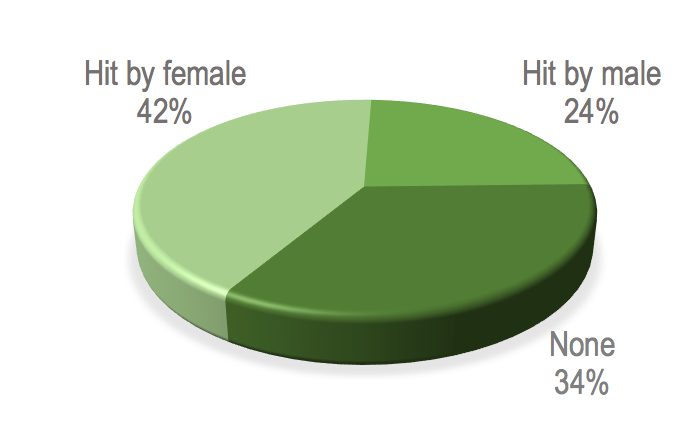
66% of members were hit
Depression Test
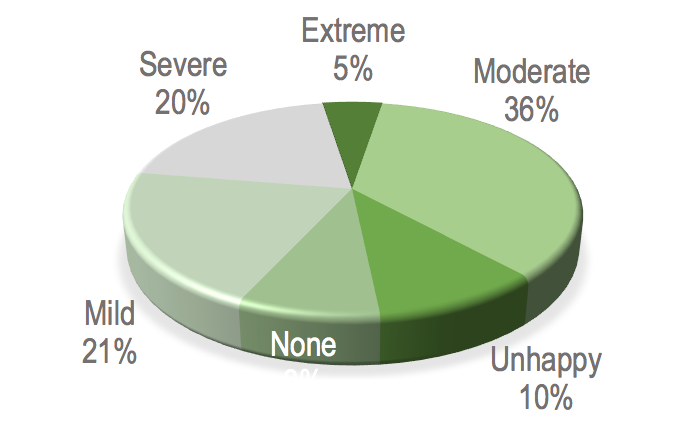
61% of members are moderate-severe
108
BPDFamily.com
>
Children, Parents, or Relatives with BPD
>
Parent, Sibling, or In-law Suffering from BPD
> Topic:
Why are we this way?
Pages: [
1
]
Go Down
« previous
next »
Print
Author
Topic: Why are we this way? (Read 3795 times)
wantmorepeace
Offline
What is your sexual orientation: Straight
Who in your life has "personality" issues: Sibling
Posts: 194
Why are we this way?
«
on:
March 25, 2026, 07:43:47 AM »
Lately, I've come to appreciate how hugely outsized and irrational my guilt and fear relative to my uBPD sibling are. I know that there are people out there who would never put up with what I put up with. And I also know from reading threads here that I'm not the only person letting themselves be treated this way to the point of mental collapse. Why are we this way?
Logged
Pook075
Ambassador
Offline
Gender:
What is your sexual orientation: Straight
Who in your life has "personality" issues: Ex-romantic partner
Relationship status: Divorced
Posts: 2391
Re: Why are we this way?
«
Reply #1 on:
March 25, 2026, 08:14:34 AM »
For me, I think it's so common to want to help others. It's a great trait to have most of the time and I do not regret helping anyone however I can.
However, when we're talking about the BPDs in my life, they don't see my giving for what it truly is. Because I used to do it often, it was seen by them as an obligation for all the ways I've hurt them in this world. So the more I gave, the more they expected and it ensured that I could never do enough for either of them.
Why? Because my time, money, support, and generosity can't fix what's actually wrong. The problem here is mental illness and disordered thinking, and there's absolutely nothing I can do to change that.
While I can't change those relationships, I can change my way of thinking and accept that I'm not in control, I can't fix things, and my best path forward is to meet them with compassion WITHOUT trying to save them from the world.
It was one of the hardest lessons of my life, but their burdens are not my burdens anymore. I'm happy to talk all day but when it comes to fixing, the best they get these days is an ear to listen and practical advice. What they do with that is up to them...it's just not my problem anymore.
Logged
CC43
Offline
What is your sexual orientation: Straight
Who in your life has "personality" issues: Child
Relationship status: Married
Posts: 1226
Re: Why are we this way?
«
Reply #2 on:
March 25, 2026, 08:35:43 AM »
Hi there,
I'm sorry your sibling isn't treating you right. As for why you put up with it, I suspect you are a kind and loving person. In normal relationships, you'd expect some reciprocation, but if your BPD sibling isn't getting therapy, chances are they are all take and no give. Rationally, you know that the relationship feels one-sided, and yet you still crave a "normal" relationship, because it's family. Logically, you know you have self-worth, and you should be able to step back if you're being abused. But it's really hard to step back when it comes to family, especially if you share living quarters. Moreover, chances are that the family system is expecting you to always be the bigger person, to always offer your love, help and support--and you want to please the other family members, too. You probably grew up with the expectation of playing that role.
Look, even in healthy families, there can be inordinate pressure to help the "favorite" child, or the "neediest" child, and that happens sometimes. But what doesn't make sense is that your sacrifice, kind-heartedness and support comes at the expense of your own general well-being. You deserve to have a life too, you know. Sometimes you have to realize that nobody else has your back, and you have to protect yourself. Sure it may be sad to come to that realization, but it's often true. You don't necessarily have to be mean about it erecting some healthy boundaries for yourself. You just have to decide to prioritize your own well-being for once. Sure, others are used to you bending over backwards to accommodate your BPD sibling. But you're allowed to take a break. You don't have to explain, just do it. You are worth it. Does that make sense?
Look, if you on the verge of mental collapse, you're probably not even thinking straight. Here we often say that people are operating in a FOG of fear, obligation and guilt. Alas, that's typical when it comes to a close family member with untreated BPD. You are not to blame for that, so you can let go of the guilt! If you need therapy, go ahead and get it. If you need a break, take it! You don't have to justify it, just do it--stop responding to mean texts, stop sending money, stop visiting your sibling who treats you badly, stop bailing them out. Usually I advise others on these boards to think of it as being a role model for what a healthy adult's life looks like. You focus on your general well-being, and that includes getting control of finances, taking care of your own family, taking care of your home environment, cultivating friendships, eating right, getting therapy if you need it. That way, you're in a healthy, balanced and calm place. Trust me, your sibling needs Calm, Cool and Collected Wantmorepeace, not a frazzled, reactive, stressed-out, resentful sibling on the verge of a nervous breakdown. Should you decide to interact with your disordered sibling again, maybe some of your healthy habits will rub off on them.
Logged
Notwendy
Offline
What is your sexual orientation: Straight
Who in your life has "personality" issues: Parent
Posts: 12422
Re: Why are we this way?
«
Reply #3 on:
March 25, 2026, 10:19:57 AM »
Family dynamics and family systems contribute to this. Where there's a family member with a disorder, the other family members take on roles to keep the family in balance. When we grow up in this kind of family dynamics, it's the only "normal" we know.
Children need their parents for survival. We are wired to seek parental attachment and approval. The behaviors we take on in our families are functional as children but may not be as adults. We probably got parental approval for being overly responsible for the disordered person- being parentified.
We may also have seen this behavior role modeled for us and see it in a positive light. Generally, being strong, and helpful, are considered positive qualities universally, but when they become overly responsible, enabling, or co-dependent they are not. It's hard to tell the difference anyway but we may not be able to if they were the "normal" in our family.
While it's not a good thing to tolerate mistreatment to the point of mental collapse, this could be the turning point "hitting bottom" that leads to positive change. It takes some self work and counseling to re-examine our family roles and learn new behaviors. We can still be helpful but in positive ways and with appropriate boundaries, but first we have to have some self care, and emotional self care. This may not feel comfortable to us if we've been taught that caring for ourselve is "selfish" but it's not. It's essential. The work of learning new ways to relate to others takes time and effort but it's worth it because you are worth investing in.
Logged
ForeverDad
Retired Staff
Online
Gender:
What is your sexual orientation: Straight
Who in your life has "personality" issues: Ex-romantic partner
Relationship status: separated 2005 then divorced
Posts: 19427
You can't reason with the Voice of Unreason...
Re: Why are we this way?
«
Reply #4 on:
March 25, 2026, 02:52:03 PM »
One of our normal inbuilt cravings is reciprocation in our relationships. We give and share while wanting others to similarly give and share. It's upbuilding and overall productive.
When things get unbalanced is when one is always giving and the other always taking, even opposing. Imagine sitting in a rowboat, you rowing toward a wonderful goal but the other is just sitting there, perhaps even rowing in the opposite direction. That eventually becomes frustrating and unworkable. In time you're tempted to give up and give in and what you do becomes, almost before you realize it, appeasing and enabling. Not a success story.
There are many relationship tools, communication skills and time-tested strategies discussed here. Many members have been here for years and our collective wisdom is a result of our "been there, done that" experience.
One skill, one of many, is learning what Boundaries are. Boundaries are not placed on the misbehaving person because typically they resist proper boundaries of behavior. While it isn't intuitive,
Boundaries are for us
. How so? Boundaries are how we
respond
to poor behavior.
For example, the other person may start ranting, raging, blaming us, making demands, virtually taunting us to respond similarly. However, we can have a clearly stated Boundary that we won't sit by as a willing target. Rather we can decide to exit and go elsewhere such as to the park, to a restaurant or the supermarket, stating we will return. That gives the other time to reset. Will it work? Probably not so much at first. Hopefully over time at least part of our boundary will become the normal and accepted policy.
If there are minor children, it's best not to leave them with a spouse who is in such a dissociated state. Yet most will oppose the children being removed from the conflict. That is something to ponder... how to help the kids not to remain stuck in the middle of conflict.
Logged
Methuen
Offline
What is your sexual orientation: Straight
Who in your life has "personality" issues: Parent
Posts: 1972
Re: Why are we this way?
«
Reply #5 on:
March 25, 2026, 06:11:11 PM »
Quote from: wantmorepeace on March 25, 2026, 07:43:47 AM
Lately, I've come to appreciate how hugely outsized and irrational my guilt and fear relative to my uBPD sibling are. I know that there are people out there who would never put up with what I put up with. And I also know from reading threads here that I'm not the only person letting themselves be treated this way to the point of mental collapse. Why are we this way?
Because we "care", are kind, and we are good people...? In healthy relationships, these things get reciprocated, which makes us feel valued. Sadly, in a BPD relationship, guilt and fear get used against us in phrases like "you're so selfish" (if we take care of a personal need instead of their need), or, "if you loved me you wouldn't go without me", and so on. Their rages also terrify us and we learn to do
anything
to avoid that rage, which makes us weak at times and easily manipulated to meet their need. We acquiesce. We support. We enable. We caretake
their
emotions when they should be caretaking their own emotions. They are exceptionally skilled at manipulating our feelings of guilt if their need isn't being met, and their superb intuition tells them how to push our buttons to get the most powerful reaction they want (attention, drama, or some specific need). My mother has passed away now, but she used to moan/scream/wail that we didn't love her if we were leaving town even for a short weekend road trip. "Leaving" would
trigger her
feeling of abandonment, dysregulate her emotion (How could we leave her? or, sometimes: How Dare We Leave Her?), and she would say things to make me feel bad so that I would either take her with me on the family trip, or cancel our trip just to avoid the inevitable drama (twice she faked illness and we cancelled). For decades I allowed my emotions to be manipulated in this way, before I came to a breaking point because as she aged, it got bonkers.
Now she is gone and I feel like Humpty Dumpty. Broken at 64. I want to believe I can put myself back together again.
So I think your question, while simple enough on the surface, is a very complex and important one. And each response in the thread holds so many special
gems
of wisdom.
I believe it is a worthwhile exercise to keep reading the responses over and over, until body and brain have absorbed them and
processed
them on a deeper level.
The next question following yours is: "now what"?
This is a really great thread.
PS:
Excerpt
You don't have to explain, just do it.
This is just golden. I can't tell you the number of times over the years I've read about frustrated "nons" on this board, reporting that they have "declared" __________, or "written a letter" to their person with BPD. Goodness, that is only going to fan the flames and amplify the chaos and hurt. Then their next post is an outcry about the BPD's raging response. Really? What did you expect? To support what CC43 is saying: Skip the words. Just take the action (learn to set boundaries for
yourself
).
There are so many gems on this thread that could be just life changing, and life giving.
Another gem I once received was to "emotionally detach with kindness".
Logged
wantmorepeace
Offline
What is your sexual orientation: Straight
Who in your life has "personality" issues: Sibling
Posts: 194
Re: Why are we this way?
«
Reply #6 on:
March 26, 2026, 08:58:05 AM »
Thank you for all these amazing replies. I will indeed read them over and over.
Do you ever feel like you've made progress and then suddenly you're back where you were? I'm feeling a bit like that, but I also know that analogy that it's not a circle, it's a spiral. You feel like you're back in the same place, but you've really moved to another layer. I think that's right. So, I get the Humpty Dumpty feeling and I'm also guessing that you, like me, are not necessarily in the same brokenness we were 10 years ago, say.
I hope you all have a peaceful and even beautiful day.
Logged
Notwendy
Offline
What is your sexual orientation: Straight
Who in your life has "personality" issues: Parent
Posts: 12422
Re: Why are we this way?
«
Reply #7 on:
March 26, 2026, 01:27:57 PM »
Quote from: wantmorepeace on March 26, 2026, 08:58:05 AM
Do you ever feel like you've made progress and then suddenly you're back where you were? I'm feeling a bit like that, but I also know that analogy that it's not a circle, it's a spiral. You feel like you're back in the same place, but you've really moved to another layer. I think that's right. So, I get the Humpty Dumpty feeling and I'm also guessing that you, like me, are not necessarily in the same brokenness we were 10 years ago, say.
Yes, it's not linear. A spiral is a good analogy. Sometimes it's also two steps forward, one backward, but over time, it's possible to see progress.
One step is to pay attention to our own feelings. They can help guide us. It doesn't mean we act on them, sometimes that isn't appropriate, but to pay attention to them.
A clue to when I am doing too much, helping too much, enabling is the feeling of resentment. It can be the same action, but the feeling is different. If we are doing something helpful because we are willing/want to- we don't feel that. If we are doing something out of FOG, we do. We sometimes do things we don't want to do, but are willing to do it, or choose to. That is different than doing something we don't want to do, and would not be willing to do it but we do it to avoid our pwBPD being angry. That's FOG.
Resentment is the clue for us to not do something out of FOG.
An acronym is "HALT"- Hungry, Angry, Lonely, Tired. If we are feeling any of these things, we need to "Halt" - take a time out for self care. At these times we are not at our best and are more likely to react to the pwBPD, argue back, add to the drama. This is when we say "I need to pause for a moment" and disengage from the situation.
With practice, we get better at these ways of self care.
Logged
wantmorepeace
Offline
What is your sexual orientation: Straight
Who in your life has "personality" issues: Sibling
Posts: 194
Re: Why are we this way?
«
Reply #8 on:
March 26, 2026, 05:41:15 PM »
Yes! I know that resentment feeling. And I also know that I often do something that sets off a wave of abuse when I'm feeling that way. Thank you for naming it. I will use it as a signal to stop doing what I'm doing and take time away for myself.
Logged
Can You Help Us Stay on the Air in 2024?
Pages: [
1
]
Go Up
Print
BPDFamily.com
>
Children, Parents, or Relatives with BPD
>
Parent, Sibling, or In-law Suffering from BPD
> Topic:
Why are we this way?
« previous
next »
Jump to:
Please select a destination:
-----------------------------
Help Desk
-----------------------------
===> Open board
-----------------------------
Relationship Partner with BPD (Straight and LGBT+)
-----------------------------
=> Romantic Relationship | Bettering a Relationship or Reversing a Breakup
=> Romantic Relationship | Conflicted About Continuing, Divorcing/Custody, Co-parenting
=> Romantic Relationship | Detaching and Learning after a Failed Relationship
-----------------------------
Children, Parents, or Relatives with BPD
-----------------------------
=> Son, Daughter or Son/Daughter In-law with BPD
=> Parent, Sibling, or In-law Suffering from BPD
-----------------------------
Community Built Knowledge Base
-----------------------------
=> Library: Psychology questions and answers
=> Library: Tools and skills workshops
=> Library: Book Club, previews and discussions
=> Library: Video, audio, and pdfs
=> Library: Content to critique for possible feature articles
=> Library: BPDFamily research surveys
Our 2023 Financial Sponsors
We are all appreciative of the members who provide the funding to keep BPDFamily on the air.
12years
alterK
AskingWhy
At Bay
Cat Familiar
CoherentMoose
drained1996
EZEarache
Flora and Fauna
ForeverDad
Gemsforeyes
Goldcrest
Harri
healthfreedom4s
hope2727
khibomsis
Lemon Squeezy
Memorial Donation (4)
Methos
Methuen
Mommydoc
Mutt
P.F.Change
Penumbra66
Red22
Rev
SamwizeGamgee
Skip
Swimmy55
Tartan Pants
Turkish
whirlpoollife
Loading...